

The UK is on the cusp of an unprecedented political moment. Following Sir Keir Starmer’s sudden exit, Andy Burnham is on a direct, uncontested path to Downing Street. As the sole declared candidate in the Labour leadership race, his transition is widely being treated as a coronation. On Monday, 29 June 2026, Burnham delivered his first major policy manifesto at Manchester's People's History Museum, outlining his 10-year vision to "rewire Britain".
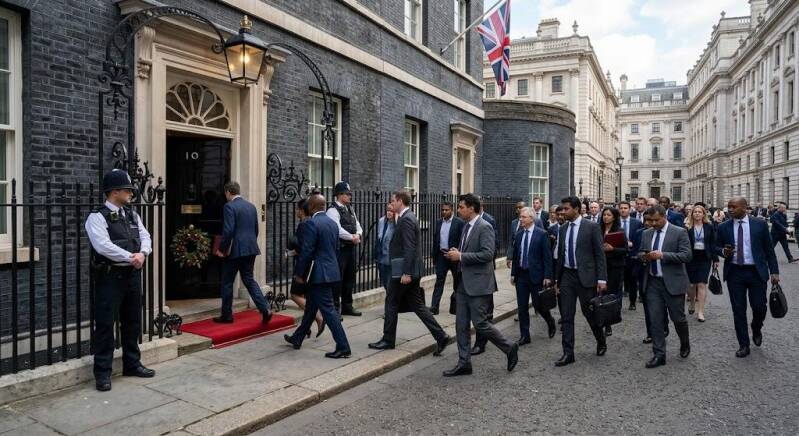
While his supporters celebrate the arrival of the "King of the North", the rapid transition has ignited fierce national debate. Critics are raising serious questions about backroom political coups, the depth of talent in Parliament, radical policy shifts, and a deepening democratic deficit.
The Makerfield Manoeuvre: Was it a "Coup"?
The accusation of a political "coup" stems from a highly coordinated, year-long operation orchestrated by soft-left Labour factions and the campaign group Mainstream. This faction systematically destabilised Starmer's leadership to clear a direct path for Burnham.
Critics label the entire process profoundly undemocratic for several reasons:
- No Public Mandate: Burnham is poised to become the UK's seventh Prime Minister in a decade without the public voting in a General Election.
- Bypassing the Members: Because other high-profile Labour figures stood aside, Burnham will assume the highest office in the land without facing a single vote from ordinary Labour Party members.
- Engineered By-Election: Burnham served as the Mayor of Greater Manchester until June 2026. He entered Parliament only days before Starmer’s resignation by winning a tightly controlled by-election in Makerfield on 18 June, after the sitting Labour MP stepped down specifically to hand him the seat.
Out of 402 Labour MPs, Was No One Else Good Enough?
The situation has fueled intense criticism that out of Labour's massive roster of 402 MPs, none were deemed capable or popular enough to lead the country.
- The Talent Vacuum: Commentators note that Starmer's strict, top-down management left the parliamentary party fragmented, unhappy, and lacking obvious successor depth.
- The Outsider Appeal: Because Burnham spent nine years away from Westminster building a high-profile reputation during the pandemic, he is being treated as a saviour. The party felt forced to parachute him back into Parliament because no sitting Westminster MP possessed his public communication skills or national popularity.
Cabinet Selection Wars and Backroom Deals
While Burnham states he will not officially announce his cabinet until he is Prime Minister, intense briefing wars have already triggered controversy:
- The Ed Miliband Chancellor Row: Burnham reportedly wants to appoint Ed Miliband as Chancellor. This has faced fierce backlash from moderate cabinet ministers and business leaders who warn that Miliband is too radical and will spook financial markets.
- The Josh Simons Reward: Josh Simons, the MP who gave up his Makerfield seat to let Burnham back into Parliament, is expected to get a senior role (potentially Head of Policy). This is highly controversial because Simons previously had to resign as a minister following an investigation into hiring external firms to probe journalists.
- The "New Labour" Guard: Burnham’s inner circle includes Tony Blair/Gordon Brown-era veterans, such as James Purnell as Chief of Staff and Jonathan Powell as National Security Adviser. This has angered the left of the party, while Powell's pragmatic stance on rebuilding trade with China has alarmed foreign policy hawks.
- Sidelining Allies: Reports suggest long-term soft-left allies like Angela Rayner and Lisa Nandy may be sidelined from the most prominent roles to accommodate market-friendly figures, leading to internal fractures.
The Policy Blueprint: Is it the Labour Manifesto?
Burnham is heavily constrained by the 2024 Labour Manifesto that the party was elected on, but his newly unveiled 10-year economic blueprint marks a sharp change in tone and execution from Starmer.
- Devolution & "No. 10 North": In his speech, he confirmed he will establish a secondary Prime Minister's office termed "No. 10 North" in Manchester. Sweeping powers over tax, skills, and industry will be shifted away from London to local regions by default.
- Fiscal Rules & Markets: He promised his pledges would be backed by "sound public finances" to reassure nervous bond markets. However, the Labour Left is actively pressuring him to break strict fiscal rules to boost spending.
- Housing: Backed by housing charities like Crisis, Burnham pledged to bypass Whitehall to launch the biggest council housebuilding programme since the post-war period.
- Taxation & Utilities: He supports replacing council tax and stamp duty with a national property value levy to raise taxes on expensive homes. He also advocates greater state control or outright nationalisation of failing utilities like Thames Water.
- Welfare & Education: He called for a shift to a "preventative state", declaring an intent to bring down welfare spending, though he refused to outline cuts to specific benefits.
- Foreign & Border Policy: He is expected to strictly maintain Starmer's policies on curbing undocumented migration and limiting refugee status.
The Firestorm Over His "Far-Left" Stance
The criticism regarding Andy Burnham's political stance varies heavily depending on the political lens. While opponents call his platform dangerously radical, commentators note that he identifies as a "soft-left" socialist rather than a "far-left" extremist like Jeremy Corbyn.
The Right-Wing & Conservative Backlash
Right-wing commentators and business leaders have heavily attacked his newly unveiled policy blueprint. Opposing political leaders claimed his Manchester proposals contain "nothing of substance" and will cause a "summer of chaos". The Telegraph described Burnham’s platform as a "museum piece" redolent of 1970s socialism, warning that his plans to nationalise utilities could panic financial bond markets and drive the economy "into the wall".
Reform UK & Nigel Farage
Reform UK has used Burnham's imminent premiership to rally its base. Leader Nigel Farage publicly warned that Burnham will be the “most left-wing prime minister for 80 years”, calling him "Starmer but even worse."
International Friction with Donald Trump
Burnham’s progressive stance has already triggered friction across the Atlantic. US President Donald Trump heavily criticised Burnham, calling him “extremely liberal” and predicting a rocky relationship. Trump specifically attacked Burnham's green agenda, stating that his left-wing climate stances mean he "probably won't open up the North Sea" for oil and gas drilling.
The Actual Far-Left & Greens
Ironically, those on the actual hard-left of British politics argue that Burnham is not genuinely left-wing and is playing a double game. Factions like Novara Media and independent left-wing MPs have criticised Burnham for being a continuation of Starmerism in disguise, highlighting that Burnham has quietly shifted right on immigration to avoid being a target for Reform UK.
The Real Concern: A Deepening "Democratic Deficit"
While the transition is entirely legal within the UK framework, political analysts describe the situation as a severe "democratic deficit". The UK system allows a Prime Minister to change without a general election because the public votes for a local MP and a political party, not a president.
However, several factors are making the public feel increasingly powerless:
- The Seventh PM in a Decade: The UK is about to have its seventh Prime Minister since 2016. Only two of them (Boris Johnson in 2019 and Keir Starmer in 2024) actually entered Downing Street by winning a general election. The rest took power via internal party manoeuvres.
- An "Elective Dictatorship": Legal experts often describe the UK system as an "elective dictatorship." Because Labour has a massive majority of over 400 MPs, the government can pass almost any law it wants without the public or opposition parties being able to stop it until the next general election.
- Power Without Accountability: The public anxiety stems from the perception that the government is operating without a direct mandate from the people. This friction was made worse when Burnham refused to take any media questions following his policy launch at the People's History Museum, leading to immediate accusations of dodging basic accountability.
Final Thought: The Great British Experiment
Andy Burnham’s impending arrival in Downing Street marks one of the most volatile gambles in modern British political history. By bypassing both the general public and his own party membership, Burnham enters office with immense executive power but a fragile democratic mandate.
His self-styled "Manchesterism"—a bold attempt to decentralise the UK and revive the economy through state-directed regional growth—will test the very limits of the British constitution. If he can unite his fractured cabinet and deliver immediate, tangible improvements to housing, infrastructure, and public services, the public may quickly forgive the unconventional backroom manoeuvres that put him in power. But if his radical economic blueprints spook the financial markets or trigger a civil war within his 402-strong parliamentary majority, this "coronation" may swiftly transform into an uncontrollable crisis of governance. For a country entering its seventh prime ministership in a decade, the stakes have truly never been higher.
Add comment
Comments