

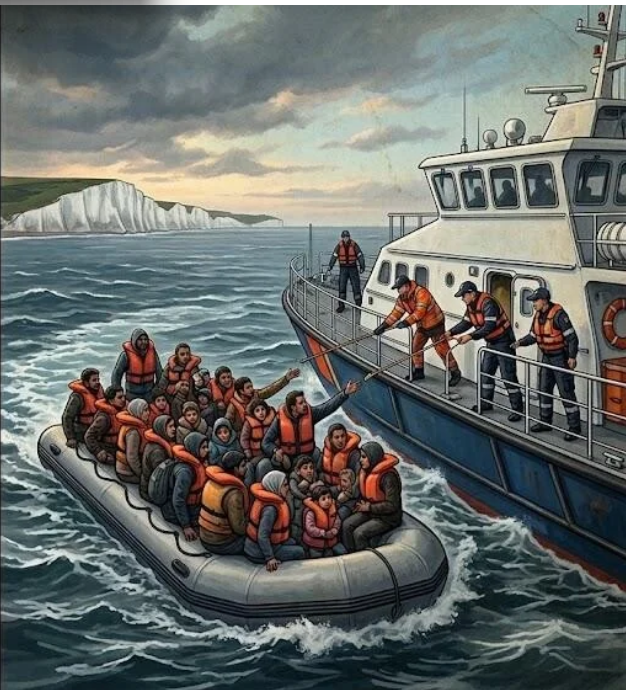
The images dominating our screens are impossible to ignore: small boats arriving daily on British shores. But behind the standard headlines lies a fierce, terrifying debate that has completely split the nation.
Is Britain facing a coordinated national security nightmare, or are we being gaslit by an administrative system trapped in legal red tape? The truth depends entirely on which side of the political fracture you look at—and the stakes couldn’t be higher.
The Terrifying Truth: A Nation Left Wide Open?
For millions of anxious citizens, the current state of border control is no longer a policy debate—it is an active national emergency. Critics argue that the government is fundamentally failing in its most basic duty: keeping its people safe.
- The Hostile Infiltration: Intelligence warnings suggest that undocumented, illegal routes are being actively exploited by hostile foreign networks. The terrifying reality is that criminal fugitives, economic chancers, and sleeper cells could be slipping into the country entirely undetected.
- Communities at Risk: With arrivals distributed into local towns, military bases, and HMOs without proper background checks, public safety fears are reaching a boiling point. Commentators are sounding the alarm over the direct, unmonitored threat this poses to the population, particularly women and young girls.
- The French Collaboration? Shocking visual evidence frequently shows overseas authorities standing by, watching, or even actively helping launch crowded dinghies, while domestic border forces are reduced to acting as a glorified taxi service.
To this side of the debate, appealing to human rights laws or international treaties is nothing more than political cowardice. They demand an immediate, military-style shutdown of the borders before the damage to British society becomes completely irreversible.
Behind Closed Doors: The Impossible Logistical Nightmare
On the other side of the divide, policymakers and security analysts claim the public is being sold a dangerous illusion. They insist there is no "magic button" to stop the boats and that aggressive tactics are a total red herring.
- The Global Supply Chain: This is a highly organised, multibillion-pound industry. The dinghies are custom-manufactured in China, smuggled across Asia, and stockpiled in hidden German warehouses before ever reaching France. Experts argue the crisis must be fought through international intelligence, not just on the water.
- The Trap of Maritime Law: Under international law, once a dangerous, overcrowded vessel hits the water, physical pushbacks or military interventions are a death sentence. At that moment, border forces are legally obligated to rescue passengers, turning the English Channel into an inescapable legal trap.
- The Invisible Victories: Defenders of the current strategy argue that shouting on television solves nothing. Instead, they point to the gruelling, invisible work behind the scenes: funding border intelligence, dismantling trafficking cartels at the source, and quietly foiling dozens of foreign terror plots that the public never hears about.
Final Thought: The Mirage of the Simple Solution
What makes this crisis so dangerous is that the public and the politicians are playing two entirely different games. The public demands a binary result—the boats must stop completely, or the government has failed. Meanwhile, politicians hide behind incremental statistics, celebrating a trafficking ring broken in Europe or an application processed a few weeks faster.
Until leaders stop using administrative jargon and start matching the raw, justified anxiety of the British population, the border will remain a ticking time bomb for public trust.
Add comment
Comments