

The rapid fall of Cambridge University's youngest Black professor, Jason Arday, has done more than just shock the academic community. His resignation—accelerated by mounting evidence of significant plagiarism and a resignation letter allegedly written by AI—has brought a long-simmering cultural friction into the spotlight.
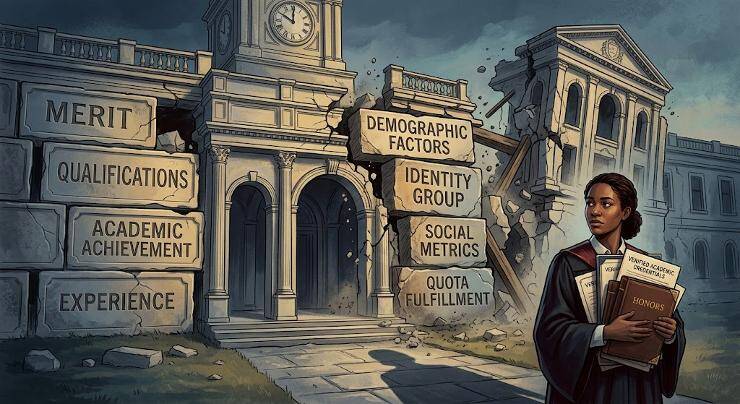
Critics argue this case is a prime example of what happens when elite institutions place optics, corporate box-checking, and Diversity, Equity, and Inclusion (DEI) metrics above rigorous vetting and meritocracy.
When Institutional Guilt Blinds Basic Vetting
For legacy universities like Cambridge, the pressure to diversify faculty has shifted from a gentle nudge to an institutional obsession. When Arday was appointed as a Professor of Sociology of Education, he was celebrated across the media. He had overcome severe early-life learning difficulties, making his swift rise to a senior chair highly compelling.
The core of the institutional critique lies in a simple question: Why did nobody verify his basic credentials?
The evidence compiled against Arday was not hidden away. It included highly public claims, such as running 30 marathons in 35 days and raising over £5 million for charities that have no record of his involvement. By relying on emotional narratives rather than standard academic background checks, Cambridge senior leadership failed to protect the university's most valuable asset: its academic integrity.
Weaponising Identity to Silence Legitimate Journalism
Perhaps the most alarming element of the scandal is how Cambridge officials initially handled external scrutiny. According to leaked emails, senior leadership dismissed initial plagiarism warnings as a “vile campaign to undermine his credibility”.
Rather than executing an immediate internal review, the system deployed defences designed to shield its DEI milestone from criticism:
- Defensive Gaslighting: Independent journalists and concerned academics attempting to review the work were framed as racially motivated.
- Legal and Police Intervention: Reports reveal that law firms were hired and police complaints for harassment were filed against legitimate investigative journalists digging into the data. The Metropolitan Police later had to apologise for wrongly pursuing the investigation.
By using identity politics as an institutional shield, university decision-makers attempted to make a heavily flawed appointment entirely untouchable.
The Collapse of True Meritocracy and its Collateral Damage
True meritocracy ensures that individual skill, verified output, and strict adherence to academic standards dictate success. When an institution defaults to superficial proxies or skips basic background checks to satisfy diversity targets, the system breaks down—and the collateral damage is immense:
- Undermining Qualified Minorities: The greatest victims of poor institutional vetting are highly qualified, hard-working Black academics who earned their senior positions through genuine merit and rigorous scholarship. When universities allow a high-profile individual to bypass standard scrutiny, it unfairly casts a shadow of doubt over every other diverse appointment, fuelling unfair scepticism from critics.
- Erosion of Public Trust: Diluting hiring standards to satisfy corporate DEI agendas alienates the wider academic community who spent decades earning their credentials the traditional way.
- The Big Irony: Academics who fiercely defended Arday based on his background have inadvertently become his greatest detractors. By placing him on an unverified pedestal without checking his data, they guaranteed that his exposure would inflict maximum damage onto the credibility of the very diversity initiatives they sought to protect.
The Path to Recovery: De-politicising Higher Education
The University of Cambridge has announced a comprehensive review into its senior academic hiring processes. However, a simple policy tweak will not fix a fractured system. True reform requires a complete cultural pivot:
- Total Transparency: Background checks must be blind, uniform, and automated. No academic's CV should bypass scrutiny because their personal story matches an institutional PR goal.
- Dismantling Performative DEI: Universities must return to being centres of original thought and rigorous inquiry, rather than vehicles for corporate social justice agendas.
- Protection of Free Speech: Institutions must actively protect journalists and researchers who question data, rather than treating criticism as an automatic cultural offence.
Final Thought
If the UK’s leading universities want to remain world-class, they must remember that a reputation built on centuries of excellence can be erased overnight by a desperate rush for modern social approval.
The Jason Arday scandal is a stark warning. True reform requires a complete cultural pivot away from performative agendas. Background checks must be uniform, and no academic's CV should ever bypass scrutiny because their personal story matches an institutional public relations goal. Until universities return to being centres of original thought rather than vehicles for corporate social justice agendas, they will continue to sacrifice their integrity and reputation on the altar of optics.
Add comment
Comments