

The recent explosion of violence on the streets of Middlesbrough—resulting in multiple deaths, including two police officers and a young child—has shocked the nation. But for those who live here, the tragedy feels less like a sudden shock and more like the inevitable conclusion to a long, steady collapse of public order.
This isn't an isolated blip; it is a systemic crisis. The central question gripping the community is no longer just what happened, but how this level of lawlessness was ever allowed to escalate, why the crime rates have soared to historic highs, and why decades of local political leadership have failed to stop the rot.
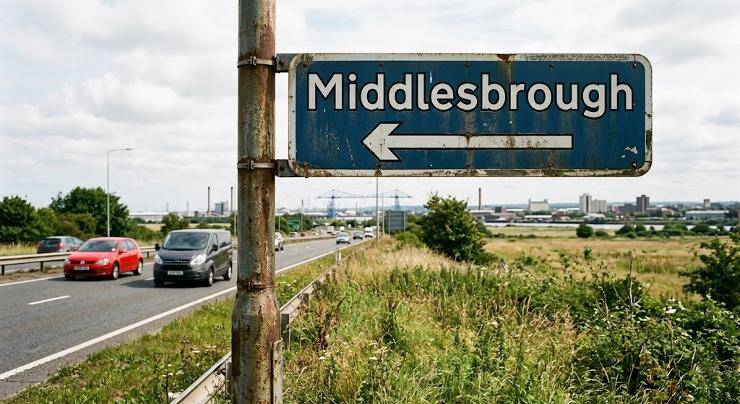
The Anatomy of Escalation: How Lawlessness Took Root
Lawlessness does not happen overnight. It escalates when the basic structures designed to protect a community are slowly withdrawn, leaving a vacuum that is eagerly filled by criminal elements.
- A Borderless Criminal Grip: On the ground, criminal networks and rival gangs have established an alarming level of control over local estates. Observers note that gang leaders are actively grooming children as young as eight or nine, drawing vulnerable youth into a cycle of crime before they even reach high school.
- The Death of Consequences: Over years of creeping neglect, a culture has formed where masked youths commit serious crimes with a total sense of impunity. When local vigils descend into torching cars and launching fireworks at emergency workers, it signals a deep-seated contempt for authority. Crime experts point out that when police presence is spread too thin, the street ceases to be governed by the state and becomes governed by the bully and the gangster.
Behind the Numbers: The UK's Crime Capital
The assertion that Middlesbrough has been abandoned to crime is not just an emotional reaction—it is backed up by devastating statistical realities that target the heart of Labour's regional performance.
- The Grim Leaderboards: Local law enforcement is under historic strain. According to detailed metric breakdowns featured in The Independent and The Northern Echo, Cleveland Police officially holds the UK's highest per-capita rates for homicides, knife offences, shoplifting, and criminal damage or arson.
- The 150 Per 1,000 Reality: Middlesbrough currently suffers from a staggering crime rate of 150 crimes per 1,000 residents. Analysis from AOL News highlights that the town’s crime rate is more than double the national average and significantly outpaces major metropolitan hubs like Cardiff, Newcastle, or Sheffield.
- The Northern Failure Trajectory: Home Office figures show that Middlesbrough has overtaken Blackpool to become the most dangerous place to live in England and Wales outside of central London, a shift extensively tracked by Chronicle Live and The Mirror.
- The Manchester Parallel: This regional surge in lawlessness isn't unique to Teesside—it mirrors a broader pattern of decline across major northern strongholds. Sitting right behind Blackpool, Manchester is officially ranked as the third most dangerous city in the country outside of London, suffering from an alarming rate of 143 crimes per 1,000 residents. This systemic rise in urban crime occurred directly under the watch of Andy Burnham, the former Mayor of Greater Manchester who has since transitioned to become the UK's Prime Minister. Critics point out that the current Prime Minister's legacy in his own former heartland is defined by the same unchecked crime wave now tearing through Middlesbrough.
Decades of Failure: The Silence of the Local Leadership
With Middlesbrough consistently breaking records for violent crime and deprivation, residents are asking tough, uncomfortable questions about political accountability. The local area and its council have been overwhelmingly dominated by the Labour Party for over half a century.So why, across five decades of uninterrupted political control, has the local leadership failed to address the systemic decline?
- The Blame Game: For years, local representatives have pointed the finger outward, blaming central government cuts and an outdated national funding formula that allocates policing cash based on sheer population rather than actual crime rates or deprivation. While those funding disparities are real, critics argue it serves as a convenient shield to deflect from local policy failures.
- The Ignored Timeline of Warnings: The terrifying reality is that local leadership knew the breaking point was coming—and their own party leaders chose to look the other way. Reports published by The Times and The Telegraph reveal that Matt Storey, Cleveland's Labour Police and Crime Commissioner, sent at least seven urgent letters to central government warning that his force was "woefully underfunded" and unable to protect the public.
- Five Unanswered Pleas: The breakdown of this correspondence exposes a devastating political disconnect. While two letters received baseline responses, five urgent pleas went completely unanswered by ministers. In January, Storey's office explicitly warned that an insultingly low 3.3% budget settlement would force severe cuts to frontline police numbers. Just weeks before the fatal A66 crash, a final warning was sent directly to Andy Burnham, warning that a recruitment freeze was driving deep panic over whether help would be there when a crisis hit. It wasn't. Westminster simply ignored it.
- Virtue Signalling over Hard Policing: Community critics and former police officers argue that local leadership and senior police management have spent years prioritising "fashionable" cultural initiatives and diversity milestones over the gritty, essential work of community policing. While officials focused on optics, working-class communities were left to fend for themselves, creating a deep sense among residents that they have been completely ignored because they lack political leverage.
The Short-Term Fix for a Long-Term Rot
The sudden deployment of 200 mutual aid officers from surrounding counties like Yorkshire and Northumbria has temporarily flooded the streets with high-visibility policing. Sirens echo daily, and arrests are rising. But this is a temporary sticking plaster on a deep, infected wound.
As policing experts warn, treating organised crime like a game of whack-a-mole—where hitting one simply causes two more to pop up elsewhere means a short-term surge will achieve nothing lasting. Until local leaders take responsibility for decades of stagnation, rebuild trust with the law-abiding majority, and aggressively disrupt the gangs grooming the next generation, Middlesbrough will remain trapped in a cycle of chaos. The streets can be flooded with police today, but the long-term survival of the town requires a complete overhaul of the political status quo that allowed it to fall this far.
Final Thought: The Real Cost of Being Ignored
The deep-seated tragedy of Middlesbrough isn't just the statistics, the sirens, or the sudden, reactive influx of outside police forces. The true tragedy lies in the generation of working-class families who have been systematically left behind by the very political machine they trusted to protect them. For fifty years, local leadership has treated this community's loyalty as a given while letting the fabric of public safety unravel. Lawlessness didn't just happen to Middlesbrough—it was permitted through decades of calculated political indifference. If the current crisis teaches us anything, it is that a community can only be ignored for so long before the consequences become impossible for Westminster to ignore.
#Highestcrimerate #Manchestercrime #AOLNews #TheMirror
Add comment
Comments