

The question of who should be allowed to vote in British elections has resurfaced as a major point of political discussion. At the centre of this debate is a long-standing feature of the British electoral system: qualifying Commonwealth citizens residing in the UK hold full voting rights in general and local elections, even if they do not possess British citizenship. While this policy dates back decades, recent discussions have highlighted the scale of the eligible voting population and raised questions about whether the system remains appropriate in the modern era.
The Historical Context of Commonwealth Voting Rights
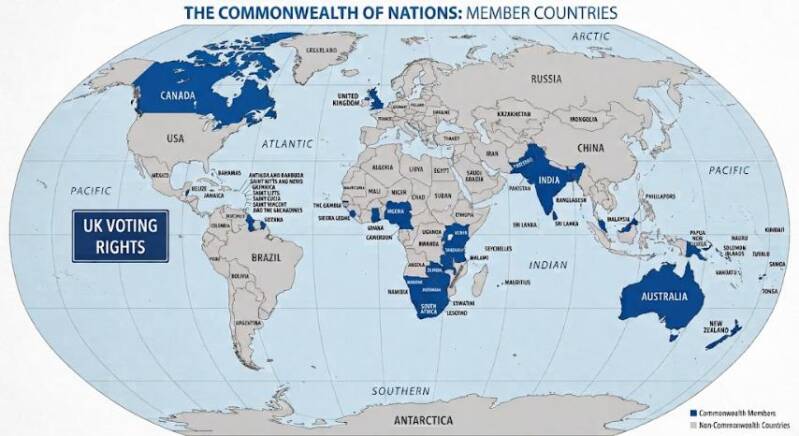
Unlike many nations where voting is strictly restricted to citizens, the United Kingdom has historically extended voting franchises to citizens of Commonwealth nations. Under the Representation of the People Act 1983, any Commonwealth citizen who is legally resident in the UK—meaning they have valid leave to enter or remain, or do not require it—is eligible to register to vote in all public elections.
This arrangement stems from the historical ties of the British Empire and the transition to the Commonwealth of Nations, where subjects of the Crown were traditionally viewed as sharing a common civic status. Nations included under this rule span from India, Pakistan, and Bangladesh to Nigeria, Australia, and Canada.
The Scale of the Eligibility Pool
Recent demographic analyses have drawn attention to the total number of foreign nationals eligible to vote under these rules. Estimates indicate that over 1 million residents in the UK hold voting rights through their Commonwealth status without holding British passports.
Data breakdowns often highlight significant populations from specific nations living legally within the UK, including hundreds of thousands of citizens from India, Pakistan, Nigeria, and Bangladesh, alongside tens of thousands from countries like Australia and New Zealand. Because these individuals can participate in tight electoral contests, their presence within the electorate is a significant factor in local and national political strategies.
Arguments for Reform
Critics of the current system argue that the policy is an outdated anomaly that undermines the concept of national citizenship. The primary arguments for reforming or ending Commonwealth voting rights include:
- Lack of Reciprocity: Opponents point out that British citizens living abroad in most Commonwealth countries, such as India or Pakistan, do not receive reciprocal voting rights in those nations' domestic elections.
- The Principle of Citizenship: Many argue that the right to determine the direction of a country’s government should be exclusive to those who have fully naturalised as citizens and taken an oath of allegiance.
- Political Imbalances: Some political commentators suggest that certain demographics within the Commonwealth cohort lean towards specific political platforms, which can influence election outcomes in ways that do not reflect the votes of citizens alone.
Arguments for Maintaining the Status Quo
Conversely, defenders of the existing framework argue that the policy reflects the UK's unique global relationships and fosters civic integration. Key points in favour of retaining the rights include:
- Taxation and Contribution: Proponents argue that legal residents who live, work, and pay taxes in the UK contribute directly to society and should therefore have a voice in how public services are managed and funded.
- Commonwealth Solidarity: Maintaining the franchise is seen by some as a vital symbol of soft power and a reflection of ongoing geopolitical partnerships with Commonwealth allies.
- Encouraging Civic Participation: Allowing long-term residents to vote is viewed as a mechanism that encourages integration into British civic life, rather than marginalising large communities.
A Growing International Conversation
The conversation in the UK mirrors similar debates taking place across Europe regarding immigration, naturalisation timelines, and voting eligibility. While countries like Sweden have historically faced scrutiny over how long-term residency translates into civic participation, the UK's automatic inclusion of Commonwealth residents remains distinct due to its historical origins. As political dynamics shift, the discussion around whether to restrict the ballot box strictly to British passport holders or maintain historic Commonwealth ties remains a deeply polarised topic.
Final Thought: Redefining the Modern Franchise
Ultimately, this debate forces the UK to confront a fundamental question: What should give a person the right to shape a nation's future? Is it the historic, shared legacy of the Commonwealth, the tangible economic contribution of paying taxes as a legal resident, or should it be strictly bound to the legal status of British citizenship?
As global migration patterns shift and political margins grow increasingly thin, the rules governing the ballot box are no longer seen as mere administrative quirks left over from history. Instead, they are increasingly viewed as powerful factors that can tilt the scales of national governance. Balancing historical obligations with the principles of modern national sovereignty remains one of the UK's most complex and sensitive constitutional challenges.
Add comment
Comments