

Resident doctors’ demands for higher wages risk fuelling a cycle of government borrowing and inflation. While these medical professionals may improve their own financial situations, this ultimately hurts millions of low-wage workers, such as carers and shop assistants, who are left struggling to pay bills in a more expensive economy.
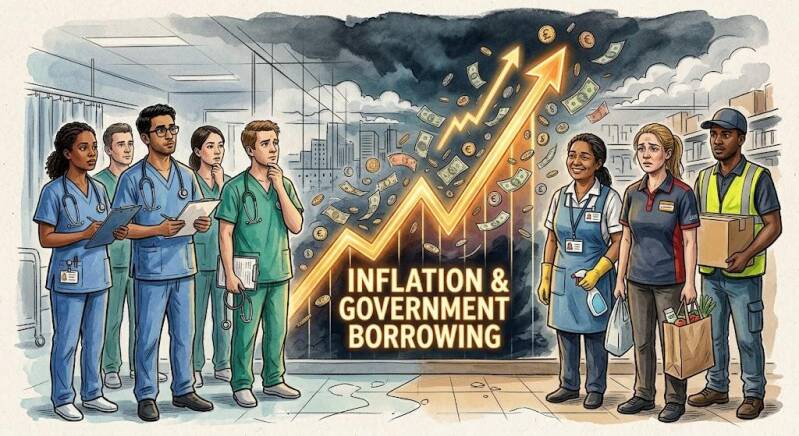
The Ripple Effect: How Healthcare Demands Impact the Lowest Paid
We all expect the medical profession to be the ultimate caring profession. We look up to doctors to put the health and wellbeing of others above all else. However, the recent push by resident doctors for massive pay hikes forces us to look at the harsh realities of basic economics, and the consequences are deeply concerning for our most vulnerable.
The Economics of Borrowing and Inflation
When the government bows to pressure and increases pay for public sector workers like doctors, that money has to come from somewhere. Inevitably, the government ends up borrowing more or increasing the overall money supply.
Basic economics teaches us that pumping more money into the system without a corresponding increase in productivity creates inflation. When inflation rises, the cost of living goes up for everyone, from the price of a weekly food shop to utility bills and fuel.
The Squeeze on Minimum Wage Workers
While doctors might feel financially better off in the short term, the subsequent inflation is devastating for the millions of people trapped on the minimum wage, such as carers, shop assistants, and hospitality staff. These workers often cannot secure rapid pay rises to match soaring inflation.
As a result, their already stretched salaries lose purchasing power. Instead of looking out for the wider community, it appears that high-earning doctors—who already take home solid salaries—are inadvertently shifting the economic burden onto those who can least afford it.
A Disconnect from the Real World
It makes you wonder if those in the medical profession have truly considered the consequences of their actions. When strikes cause disruptions, it is the everyday working person who suffers.
Furthermore, we are starting to see the bizarre consequences of these broader economic shifts. Many low-wage workers are realising that, once you factor in the inflated cost of living and travel, they might actually be better off claiming state benefits than working demanding jobs in cafes or restaurants.
When there is no one left to serve doctors in restaurants because minimum wage staff have chosen to rely on benefits, perhaps they will finally pause and think about the societal consequences of their demands.
What are your thoughts?
Does the caring profession have a responsibility to consider the broader economic picture, or is it solely up to the government to manage inflation? Let me know in the comments below.
Add comment
Comments