

Andy Burnham has secured a dramatic return to Westminster by winning the Makerfield by-election, following the intentional resignation of sitting Labour MP Josh Simons. By stepping down explicitly to create a vacancy for the Greater Manchester Mayor, Simons triggered a high-stakes special election that has placed Burnham on a direct path toward a Downing Street leadership challenge.
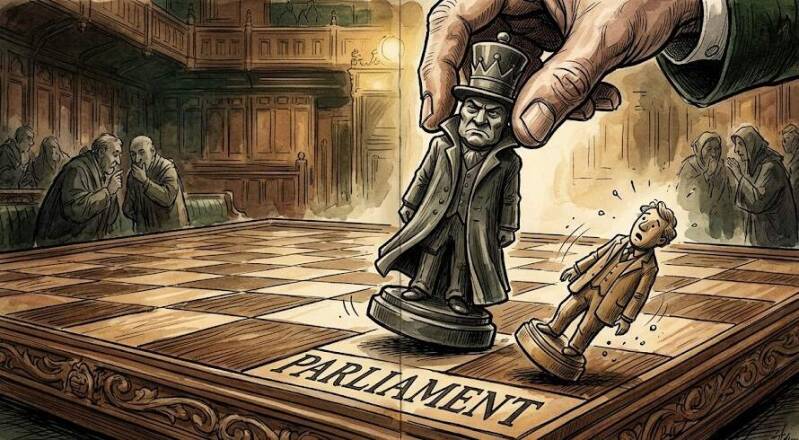
For the electorate, democracy is ostensibly about choosing a local representative based on policy, vision, and a commitment to serve. However, the coordinated sequence of events that catapulted Andy Burnham from the Greater Manchester mayoralty back to the benches of the House of Commons forces us to ask a fundamental question: how can this be a democratic state?
The Orchestrated Exit
The premise of representative democracy relies on a Member of Parliament serving their constituents for the duration of a parliamentary term. Yet, when Burnham decided he wanted to be Prime Minister, he didn't wait for a general election. Instead, sitting MP Josh Simons resigned his seat in May 2026 for the sole, explicit purpose of giving Burnham a gateway into Parliament.
The fact that an elected lawmaker can simply vacate a seat to serve as a stepping stone for another politician's personal leadership ambitions presents a troubling picture. It begs the question: who are these MPs really serving? Their local constituents, or the internal chessboard of party power?
Overriding the Local Election Signal
To add to the complexity of Burnham's rise, the local elections held just weeks prior painted a very different picture of voter sentiment. In the local council elections, Reform UK had dominated the area, highlighting profound voter frustration and a clear mandate against the political establishment.
While Burnham did go on to secure an emphatic by-election victory on 18 June, the speed with which the party machinery engineered a vacancy to install a national "star" candidate right after a local rejection leaves voters questioning the system. It makes it feel as though local voter signals are not being listened to but are instead managed and neutralised by elite party politics.
The Route to Downing Street
Burnham's victory now sets the stage for a dramatic showdown in Westminster. To launch a formal leadership challenge against Prime Minister Sir Keir Starmer, he must now secure the backing of 81 Labour MPs.
While Burnham has pitched himself as the only figure capable of rebuilding working-class trust and taking the fight to Reform UK, the process highlights a systemic flaw. It suggests that a country's Prime Minister can effectively be unseated and replaced mid-term not through a national general election, but through a series of tactical MP resignations, rapid by-elections, and internal party negotiations.
Does the System Work for the Voter?
At its core, a democratic state is meant to be governed from the bottom up. The manoeuvrings we’ve witnessed in Makerfield—where a sitting MP steps aside to accommodate an ambitious regional leader—feel deeply transactional. It reduces the electorate to a mere tool for facilitating a Westminster leadership coup.
If voters are to trust the democratic process, politicians must earn their mandates naturally rather than treat constituencies as disposable assets to be traded when ambition calls.
What do you think?
Is this engineered vacancy a sign of a dynamic, adaptive political system, or proof that the voice of the electorate is being sidelined for party power? Join the conversation in the comments below.
Add comment
Comments