

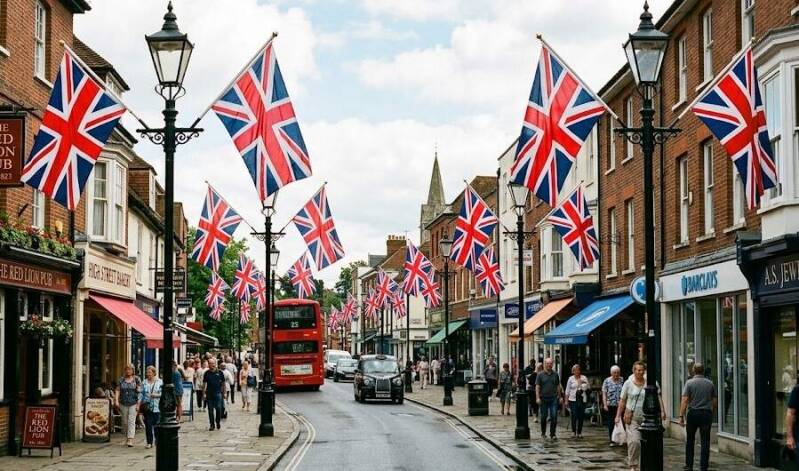
The debate over flying the Union Jack and the St George’s Cross has escalated from a war of words into a high-stakes legal battleground. While central government guidance encourages flying national flags on public buildings, local authorities are taking unprecedented legal actions to curb unauthorised street displays. These actions have ignited a fierce debate pitting local council enforcement against national identity.
The Core Debate: Patriotism vs. Provocation
The widespread visibility of flags across the UK—driven largely by the grassroots, social media-led "Raise the Colours" movement—has deeply divided local communities:
- Supporters View It as Unity: For many, displaying the flag on street furniture is a harmless expression of civic pride, national identity, and solidarity. Proponents argue that taking pride in national symbols should be normalised rather than demonised.
- Critics View It as Exclusionary: Opponents and several local authorities argue that unauthorised, widespread flag-hanging has been weaponised by specific groups. In diverse urban areas, critics claim the displays cause community tension and a sense of intimidation.
High-Stakes Council Clashes: Fines and Prison Sentences
Local councils are moving past simple removal policies and are pursuing severe judicial penalties to stop unauthorised flag-raising on public infrastructure:
- Oxfordshire’s High Court Injunction: The Liberal Democrat-led Oxfordshire County Council launched a landmark legal battle, applying for a High Court injunction against members of the Raise the Colours group. Anyone breaching the order by hanging flags on or near public highways faces up to two years in prison or an unlimited fine.
- Bristol’s Blank Ban: Similarly, Bristol City Council has imposed a strict ban on residents hanging flags from lampposts and street furniture, citing safety hazards and the risk of making some residents feel unwelcome.
The Absurdity Phase: Imagine This Anywhere Else
To many onlookers, the lengths to which British councils are going to criminalise displays of the national flag seem entirely detached from reality.
Imagine waking up in almost any other country on Earth and discovering that displaying the national flag could land you in prison for two years.
- The United States: Imagine a local municipality in Texas or Ohio threatening a citizen with an unlimited fine for hanging the Stars and Stripes from a street pole ahead of the 4th of July. It would be met with immediate constitutional outrage and universal ridicule.
- Scandinavia: Walk through the suburbs of Denmark or Sweden, and you will find the Dannebrog or the Swedish flag flying proudly from private gardens, public spaces, and allotments as a completely apolitical symbol of summer, community, and joy. No one feels threatened, and no council threatens legal action.
- France: Imagine the French authorities threatening a citizen with a jail sentence for draping the Tricolore over a public railing after a major World Cup victory.
The idea that the home country of the Union Jack has become a place where displaying the flag can be treated as a criminal offence, on par with serious public disorders, strikes many as a bizarre and uniquely British absurdity. Critics argue that no other self-respecting nation on Earth holds its own national identity in such utter contempt.
Political Stances: Reclaiming vs. Taxpayer Waste
The intervention of the courts has turned local flag-hanging into a prominent national political talking point:
- The Conservative View: Right-leaning politicians and critics slam council crackdowns as heavy-handed and out of touch. Conservative councillors have questioned the timing of these legal escalations, arguing that dragging patriotic displays through the courts is a shameful waste of taxpayer money.
- The Council View: Authorities maintain that their actions are strictly about public safety, the legal duties of a highway authority, and keeping public spaces inclusive. They emphasise that residents remain entirely free to proudly fly the Union Jack and St George’s Cross on their own private property.
Final Thoughts
The conversation around flying the British flag highlights a deep sociological and political rift. As councils resort to the threat of prison time and unlimited fines to maintain order on the highways, bridging the gap between "civic pride" and "public nuisance" remains one of the UK's most volatile cultural dilemmas.
Add comment
Comments