

The North Sea Paradox: Buying Our Own Oil Back from Norway
During his recent comments addressing the UK’s changing political guard—including the frontrunner to take over, Andy Burnham—Trump did not hold back on the UK economy's abysmal state. He highlighted Aberdeen, once the booming oil capital of Europe, but noted that the UK is now effectively “dying” economically because it has shut down its drilling.
The absurdity of this self-inflicted crisis is staggering:
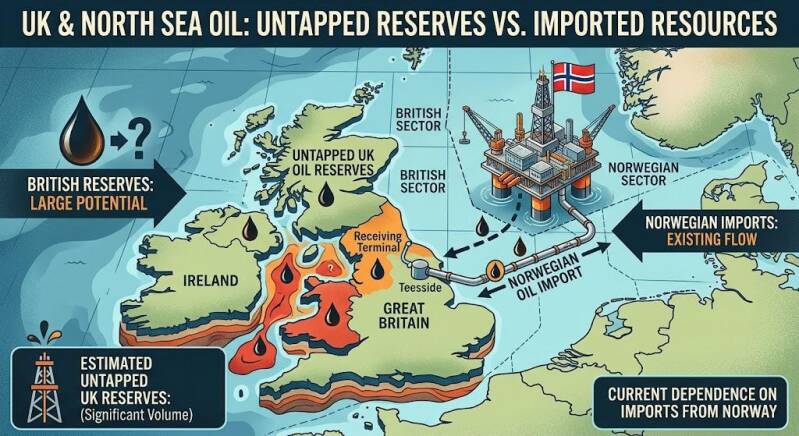
- The Refusal: The North Sea is loaded with oil. Trump noted that major oil companies have been begging for access to drill, yet the UK refuses to grant it.
- The Import Premium: Instead of tapping into local reserves, the UK buys oil from neighbours like Norway—who drill in the exact same North Sea—at a massive premium.
- The Zealotry: Ideological climate policies mean the UK intentionally handcuffs its own economy, while neighbouring nations profit off the exact same geography.
Ed Miliband’s Policy Failures: The Ideological Stranglehold
At the heart of this economic decline is Energy Secretary Ed Miliband, whose rigid green agenda has faced heavy criticism for actively damaging the nation’s energy security and industrial foundations. Rather than adapting to global pressures, Miliband’s tenure has been defined by specific, costly missteps:
- Permanent Drilling Ban: Miliband has aggressively advanced legislation through the Energy Independence Bill to permanently ban new oil and gas drilling licences in the North Sea. This locks future governments out of local energy supplies and deepens reliance on imports.
- Derailed Defence Funding: In a stunning display of prioritising ideology over national security, reports revealed that Miliband vetoed a Treasury plan to expand North Sea production. The plan would have generated billions in tax revenue to fully fund the Ministry of Defence’s delayed investment programs.
- Surging Green Levies: Miliband’s policies are keeping green levies directly attached to energy bills, adding a staggering £11 billion a year to consumer costs—a figure projected to rise to £18 billion by 2030. Even climate panels have warned that his heavy levies are holding the economy back.
- Failing Fossil Fuel Targets: Despite pushing a “messianic” green drive, government data revealed his policies failed to reduce reliance on fossil fuels, with fossil fuel generation for electricity actually rising by 2% due to plummeting nuclear outputs.
Rebellion in the Ranks: Scottish Labour Warns of “Self-Harm”
Miliband’s dogmatic approach hasn’t just angered the opposition; it has sparked open panic and rebellion within his own party. Senior Scottish Labour figures and trade unions are warning that the anti-drilling policy is an act of economic self-destruction that will cost them dearly at the ballot box.
- Anas Sarwar’s Pushback: Fearing absolute humiliation in the upcoming elections, Scottish Labour leader Anas Sarwar has actively broken ranks. Sarwar has repeatedly petitioned Miliband, calling instead for a “balanced approach” that protects the sector and allows drilling to proceed on critical, untouched oil fields like Rosebank and Jackdaw.
- The Union Backlash: Sharon Graham, General Secretary of Unite—Labour’s largest union financial backer—slammed Miliband’s refusal to permit exploration as a literal “act of self-harm” that puts tens of thousands of Scottish jobs and national security at risk.
- Even Union Bosses Agree with Trump: GMB Union leader Gary Smith went even further, directly branding the Westminster drilling ban as “economic madness” that will decimate local communities.
When your own regional leaders and working-class unions tell you that your policies are destroying livelihoods, it’s no longer a climate strategy—it’s an ideological crusade.
Destroying Industry: The Chasm Between US and UK Energy Costs
Trump’s critique of the UK goes beyond just oil; it is a fundamental lesson in industrial survival. He pointed directly to the United States and the aggressive decisions made to unlock American shale gas, securing energy independence and establishing a manufacturing powerhouse.
The structural divergence between the two economies is staggering across three main pillars:
- Industrial Electricity Costs: While the US economy remains highly competitive due to its massive domestic shale reserves, the UK economy faces costs that are four times higher, plunging local manufacturing into an industrial cost crisis.
- Global Price Competitiveness: Cheap domestic power in the US is actively fuelling an artificial intelligence and manufacturing boom. Conversely, UK industrial costs sit 46% above the global average, forcing local firms to slash investments.
- Strategic Energy Priority: The American approach prioritises maximum supply to lower overheads and drive a robust 2% GDP growth rate. The UK strategy instead prioritises “sending a message”, resulting in the highest industrial energy costs anywhere in Europe.
Saddling manufacturers with these astronomical bills doesn’t save the planet—it just forces British production, jobs, and capital to move offshore.
Punishing the Public: The Brutal Toll on Everyday Household Bills
The economic fallout of this anti-drilling ideology isn’t confined to corporate boardrooms. It hits regular citizens directly in the pocketbook every single month. Because the UK refuses to secure energy independence, its grid remains deeply exposed to volatile international gas shocks and geopolitical flare-ups.
The household reality in the UK is increasingly bleak:
- The Price Spike: Under the latest Ofgem Price Cap, the typical annual household energy bill has skyrocketed by 13% to £1,862.
- The Added Burden: This sudden spike forces working families to cough up an extra £221 a year just to keep the lights on.
- The Winter Outlook: Analysts predict that by the end of the year, annual bills will surge even further to an estimated £1,932.
- The Fixed Standing Charge: British consumers are forced to pay roughly £315 a year in mandatory standing charges before they even turn on a single appliance or radiator.
A Needed Dose of Realism
While UK policymakers try to lecture the rest of the world on renewable energy, leaders in places like the US and China take a highly pragmatic approach. Trump noted that even China, which heavily invests in renewables, understands that the number-one priority is economic growth. Consequently, China utilises every available resource—solar, wind, nuclear, gas, and coal—to power its industries.
Britain’s current approach seems to be about “sending a message” rather than ensuring national prosperity. As Trump made clear, unless the UK changes its direction on energy, abandoning its expensive anti-drilling policies in favour of modernising North Sea exploration, the economy will continue to suffer.
Final Thoughts and The Way Forward
Holding onto ideological Net Zero theories is driving the decline of British industry and the impoverishment of British households. It is time to take a page out of the American and the Chinese playbook, prioritise national interests over climate virtue signalling, and unleash the country’s energy potential.
#EnergyPolicy #NetZero #EconomicGrowth #Manufacturing #EnergyIndependence
Add comment
Comments