

For over a century, the British Broadcasting Corporation (the BBC) has been marketed as the gold standard of global journalism—a public bulwark of truth, objectivity, and strict impartiality. However, the reality inside the corporation is vastly different. Hit by a historic wave of institutional failures, highly visible content scandals, and a catastrophic collapse in public trust, the broadcaster is facing an existential crisis.
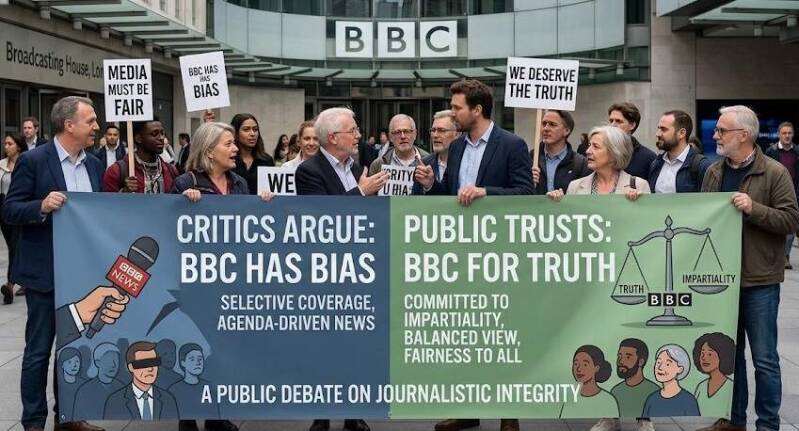
The deep-rooted issues came to a dramatic head when Director-General Tim Davie and CEO of News Deborah Turness abruptly resigned. Their departures followed the leak of a damning internal report by a former standards adviser, which officially confirmed what millions of viewers have long suspected: the BBC is struggling with a culture of systemic bias and major editorial failures.
To many media commentators and disillusioned viewers, the modern BBC no longer resembles a free press. Instead, it increasingly mirrors the terrifying, memory-holing world of George Orwell’s dystopian novel 1984.
The Ministry of Truth in Real Life
In 1984, the protagonist Winston Smith works at the "Ministry of Truth" (Minitrue), where his sole job is to rewrite history, doctor old newspaper articles, and alter photographs so they always align with the current political narrative of the ruling Party.
The catalyst for the current real-world BBC crisis reads like a direct extract from Orwell's pages. An explosive 53-page internal memo authored by Michael Prescott, a former external adviser to the BBC's Editorial Standards Committee, exposed a shocking newsroom culture willing to alter or distort facts to serve predefined political agendas.
The most egregious failure detailed in the dossier occurred during a flagship Panorama documentary, where producers selectively spliced together two completely different parts of a speech by Donald Trump. By intentionally doctoring the footage, they made it appear as though Trump was directly inciting the January 6th Capitol riots. Much like Winston Smith rewriting past speeches in 1984 to turn a political figure into an unperson or a villain, the BBC was caught actively manipulating historical footage to manufacture a narrative.
The fallout was immediate: Donald Trump threatened a massive $1 billion lawsuit, the BBC Board was forced to admit a severe "error of judgment", and the broadcaster's two most senior executives were forced to resign in disgrace.
Doublethink and Two-Tier Realities
Orwell defined "Doublethink" as the power of holding two contradictory beliefs in one's mind simultaneously, and accepting both of them. Critics argue that the BBC has mastered this psychological trick, resulting in distinct, contradictory biases depending on the issue:
-
The "Metropolitan Elite" Left-Leaning Bias
Critics on the political right argue that the BBC’s rank-and-file staff are overwhelmingly recruited from a specific urban, university-educated demographic. This has allegedly created an ideological echo chamber. The Prescott report specifically highlighted a distinct lack of impartiality regarding transgender issues, where gender-critical perspectives were reportedly suppressed in favour of a single orthodoxy. Similarly, critics point to an increasingly emotive, "tabloid-style" tone on the BBC News website that prioritises progressive social framing over objective, sober reporting.
-
The International & Geopolitical Bias
The corporation’s coverage of foreign affairs has drawn intense fire from both sides of the political aisle:
- The Middle East Conflict: The BBC has faced relentless accusations of systemic anti-Israel bias in its coverage of the Gaza war. The Prescott dossier heavily criticised the corporation's framing of the conflict. This issue was worsened by revelations that the BBC Arabic service repeatedly utilised contributors with documented antisemitic views.
- The "Two-Tier" Discipline System: In a classic display of Orwellian Doublethink, rules apply to some but not to others. Sacked employees, such as former radio presenter Sean McGinty, have accused the BBC of rank hypocrisy. They point out that while some staff are fired for publicly criticising the BBC's refusal to label Hamas as "terrorists", several Arabic service journalists who actively celebrated or justified attacks faced no dismissal.
Structural Failures: Slow, Opaque, and Memory-Holed
In 1984, when the Ministry of Truth made a mistake or changed the narrative, the inconvenient evidence was thrown down a pneumatic tube into the "memory hole" to be incinerated forever. The BBC’s institutional structure treats public complaints and past errors in a remarkably similar fashion:
- The Broken Complaints Process: When a viewer spots an error or a biased report, navigating the BBC Complaints Framework is notoriously slow, defensive, and opaque. The corporation routinely investigates itself and dismisses complaints, only admitting to errors when forced by massive public backlashes or legal threats.
- A Pattern of Cover-Ups: From spending £330,000 in licence-fee money fighting in court to hide the Middle East-focused Balen Report from public view, to the recent slow response regarding the Panorama doctored footage, the top management has consistently prioritised reputation protection and narrative control over transparency.
The Verdict: Can the Broadcaster Be Saved?
George Orwell based the Ministry of Truth on his own experiences working at the BBC during World War II, even naming the infamous torture chamber "Room 101" after a broadcast room he disliked at Broadcasting House. Decades later, the corporation seems to have come full circle.
The resignations of the Director-General and the Head of News are merely band-aids on a gaping wound. Changing the executives at the top does nothing to alter a deeply entrenched newsroom culture where too many program makers struggle to distinguish between personal opinion and impartial journalism.
With the BBC Charter Review fast approaching, lawmakers and the British public are left asking an incredibly uncomfortable question: If a state-funded broadcaster behaves like Big Brother—manipulating the literal words of world leaders and enforcing a strict ideological orthodoxy—why are the British public legally obligated to fund it? Institutional, systemic reform is no longer a political talking point; it is a matter of survival.
Add comment
Comments