

Have you ever wondered exactly where your food comes from, or how it was prepared? A growing conversation around food transparency in the UK is raising questions about what is actually being served in our schools, hospitals, and favourite restaurants.
At the centre of this discussion is the "Silence of the Lambs" campaign, an initiative launched by researcher and political figure Catherine Blakelock. The campaign aims to uncover just how much halal meat is entering the public supply chain without explicit labelling.
What Exactly is Halal Meat?
To understand the debate, it helps to understand what the term means. "Halal" is an Arabic word that translates to "permissible" under Islamic law. When it applies to meat, it refers to food that has been prepared according to specific religious dietary guidelines outlined in Islamic tradition:
- The Method: The animal must be healthy at the time of slaughter, and a blessing (the Tasmiyah) is recited. The slaughter itself is traditionally performed with a swift incision to ensure rapid blood loss.
- The Stunning Debate: There is a common misconception that all halal meat is un-stunned. In reality, the vast majority of halal meat produced in Western nations involves pre-stunning, where the animal is rendered unconscious before slaughter, provided the stun does not kill the animal before the incision is made.
What the Research Reveals
Through Freedom of Information (FOI) requests, the campaign has gathered data from thousands of public institutions. The findings suggest a wide variety of practices across the country:
- Public Institutions: Initial results from roughly 3,500 schools and numerous hospitals indicate that halal meat is frequently served in everyday menus.
- The "Hidden Halal" Phenomenon: In many instances, schools with very few Muslim students serve entirely halal meat without notifying parents or students.
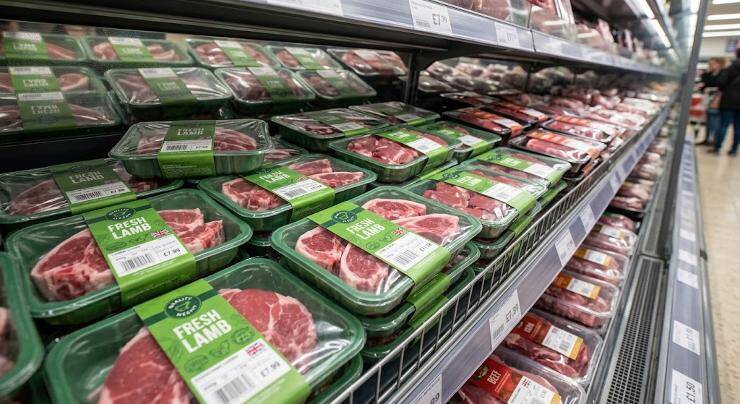
- The New Zealand Lamb Factor: One of the most surprising statistics highlighted by the campaign is that approximately 95% to 97% of all imported New Zealand lamb is halal-certified. Because New Zealand processes its meat to satisfy major global export markets in the Middle East, the vast majority of its sheep meat meets these criteria. Consequently, a massive percentage of the lamb sold on standard UK supermarket shelves is technically halal, despite carrying no indication on the front packaging.
The Rules of Regulation
A major point of contention highlighted by the campaign is how religious slaughter is monitored. Under current UK legal exemptions, halal and kosher slaughter are permitted specifically to meet the dietary needs of religious communities.
However, campaign investigations suggest a gap in oversight:
- The Food Standards Agency (FSA): According to the campaign's inquiries, the Food Standards Agency grants slaughterhouse licences but does not actively track or publish a public register of where the meat goes once it leaves the facility.
- Animal Welfare Standards: Organizations like the RSPCA campaign heavily against "non-stun" slaughter, advocating for all animals to be stunned before processing. The debate becomes complex because while all New Zealand meat is pre-stunned by law, other forms of local religious slaughter are not, leaving consumers confused about the specific methods used for their food.
Take Action: Join the Campaign to End Non-Stun Slaughter
If you are concerned about how meat is processed and want to push for stronger animal welfare laws in the UK, you can actively get involved. The RSPCA runs a dedicated campaign pushing the government to completely end the practice of non-stun slaughter, ensuring all animals are rendered fully unconscious before any incisions are made
By joining this movement, you can help protect animals from avoidable pain at the time of harvesting. Here is how you can take part today:
- Sign up for updates: Subscribe to the campaign's newsletter to track legislative progress and receive new action alerts.
- Support the push: Visit the RSPCA Non-Stun Slaughter Campaign Page (see hashtag link below) to see how you can write to policymakers, voice your support, or make a donation to help strengthen UK animal protection laws.
What Do You Think?
Food labelling laws exist to help us make informed choices about health, allergens, and ethics. Should that transparency extend to how an animal was slaughtered?
If you want to look deeper into the ongoing UK legislative debates regarding religious slaughter and consumer choice, you can read the updates provided by the National Secular Society.
How important is food labelling to you?
Knowing that nearly all New Zealand lamb fits this category, would you change your buying habits if supermarket meat carried explicit processing labels? Let me know your thoughts in the comments below!
#Halalmeat #FoofStandardsAgency #Nationalsecularsociety #FarmingUK #RSPCA #RSPCACAMPAIGN
Add comment
Comments