

A bombshell ruling by a UK tribunal has sparked fierce public debate after declaring that the public has no right to know if cabinet ministers have prior criminal convictions.
The ruling rejected a Freedom of Information (FOI) request, citing data protection laws to shield politicians' pasts from public view. The decision follows the high-profile resignation of former Transport Secretary Louise Haigh, which occurred after a previously undisclosed fraud conviction came to light. Although she is now a member of the current cabinet despite having a criminal conviction!
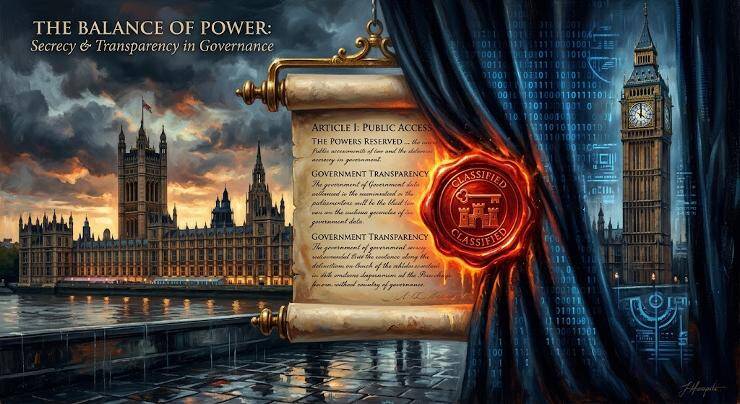
This decision flies in the face of British constitutional tradition, creating a dangerous standard of "two-tier justice" that treats the political elite as a modern aristocracy.
A Dangerous Departure from British Tradition
For centuries, the bedrock of the British legal system has been that lawmakers are not immune to the laws they create. Unlike some continental systems—where politicians historically sought office to gain immunity from prosecution—the UK has proudly rejected the idea of a protected political class.
If a Prime Minister commits a crime, they can be arrested and put on trial. The UK has never given this type of immunity to politicians carte blanche.
The current secrecy appears to be a hangover from legacy rules buried within the Freedom of Information framework. These regulations were adopted without accounting for Britain's unique constitutional principle: that politicians are our equals, not our masters. Over recent decades, successive governments have quietly held onto these protections, drifting toward a style of governance where the elite view themselves as superior to ordinary citizens.
Even constitutionally, while a provision exists in theory that the Monarch cannot be prosecuted, the reality of British history shows that Parliament would remove a rogue monarch to face trial as an ordinary citizen. A system that allows politicians to hide criminal records sits badly with the public because it is innately un-British.
The Hypocrisy of the Double Standard
The most glaring issue with the tribunal’s decision is the sheer hypocrisy it exposes when compared to the rules governing everyday British citizens.
Consider the standard vetting processes for regular jobs:
- School Volunteers: Parents joining a local Parent-Teacher Association (PTA) must pass rigorous criminal background checks.
- Everyday Professionals: Teachers, care workers, and delivery drivers routinely undergo Disclosure and Barring Service (DBS) checks.
- The "Non-Crime" Catch-22: High-profile citizens have faced investigations for "non-crime hate incidents". These recorded incidents show up on enhanced DBS checks, potentially blocking ordinary people from volunteering for local community groups like the Brownies.
Yet, under this new ruling, individuals who run government departments, control multi-billion-pound budgets, and draft national security policies are spared this basic scrutiny.
The Vetting Double Standard
When it comes to ordinary citizens versus cabinet ministers, the difference in rules is stark:
For ordinary citizens, life is defined by strict DBS checks, "non-crime" flagging on personal records, and a past that can easily prove to be career-ending.
Conversely, cabinet ministers now enjoy having their past convictions hidden, remaining entirely protected by FOI loopholes and guarded by total privacy safeguards.
Relearning the Wisdom of the Victorians
The British public has a long history of tolerance for wealth and status, but that tolerance ends abruptly when the rules of fair play are broken.
The modern political elite needs to relearn a vital piece of Victorian wisdom: the British public does not mind if you are richer or more powerful, provided the same laws apply to everyone.
This ruling is a textbook example of the elite receiving special treatment. From discussions around digital IDs—where concerns exist that politicians might secure exemptions denied to the public—to the masking of criminal histories, a worrying gap is opening between the governing class and the governed.
The Verdict: Time to Scrap the Secrecy
The law should reflect how we want to live as a nation. There is zero public appetite for an unaccountable political class hiding behind legal loopholes.
Parliament should act swiftly to dismantle these protections. If an ordinary citizen must prove their integrity to work with children or secure a job, the politicians in Westminster should be held to the same standard.
After all, if a minister has nothing to hide, they should have nothing to fear.
Add comment
Comments