

The foundational narrative of modern identity politics is built on a massive deception.
We are told by activists, corporate diversity boards, and media commentators that marginalised groups—whether defined by gender identity, sexuality, or race—are simply engaged in a continuation of the civil rights movement. They claim they are just looking for a "seat at the table" and demanding basic human respect.
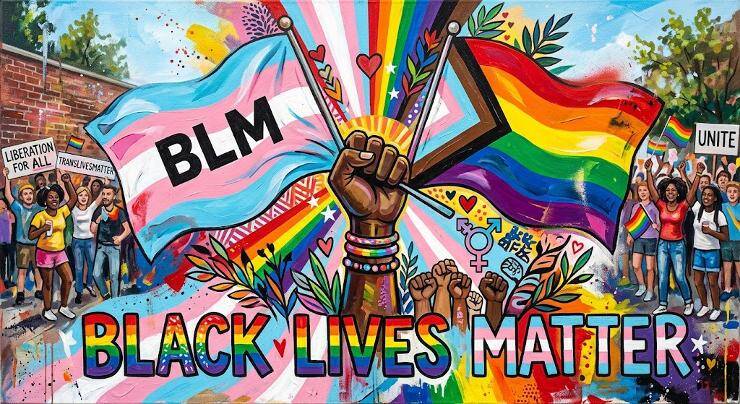
But look past the focus groups and the carefully sanitised language. The reality of "woke" culture is something completely different.
The train of social justice has reached its destination: the station of equality. But instead of stopping, it has gathered a terrifying head of steam, shot straight off the tracks, and is now scattering regular citizens in its wake.
The modern progressive movement is no longer a fight for equal rights. It has morphed into an aggressive demand for institutional privilege, exceptionalism, and a separate set of rules from the white, heterosexual majority.
The Shift from "Treat Us the Same" to "Treat Us Differently"
For decades, the universal aspiration of Western democracy was clear, noble, and largely achieved: a society where no one is held back by their immutable characteristics. We aimed for a system where a person's skin colour, sexuality, or biological sex would not prevent them from achieving their full potential. In all English-speaking nations, that principle won the cultural war.
However, the goalposts have been violently shifted.
Yesterday’s minority movements asked to be treated exactly the same as everyone else. Today’s activist class demands to be treated differently. They do not want an equal playing field; they want a protected status that elevates them above the rest of the public.
Consider the enforcement of gender ideology. When celebrities or activists demand the immediate, unquestioned overhaul of the English language—forcing major public broadcasters like the BBC to adopt niche plural pronouns ("they/them") for individuals like Sam Smith—it is not an ask for "respect". It is a declaration of power.
This bureaucratic overreach is no longer confined to cultural institutions; rather, it has systematically infiltrated state enforcement. The absolute absurdity of this institutional shift reached a new peak with recent Freedom of Information disclosures revealing that Leicestershire, Norfolk, and Suffolk police forces have issued multiple warrant cards to gender-fluid officers. This policy allows staff to switch official identification to match whatever gender they choose to identify as on a given day or hour. This introduces a dangerous double standard: if law enforcement officers cannot maintain a fixed identity, they forfeit the foundational authority required to demand identification from the public. Consider the unsettling real-world application of this policy: if a female suspect exercises her legal right to refuse an intimate strip-search by a male officer, what is to stop that officer from simply flashing a female identity card to bypass her objections? While National Police Chiefs' Council (NPCC) guidance explicitly states that searches must be conducted based strictly on biological sex, issuing conflicting state credentials creates immediate opportunities for confusion and intimidation. When a justice system prioritises the shifting preferences of its enforcers over institutional transparency, public trust collapses entirely.
Institutions are capitulating to these demands before any open, democratic public debate has even occurred. The general public is expected to instantly modify their speech, their grammar, and their understanding of biological reality simply because a minute fragment of society demanded it. That isn't equality; that is the enforcement of a psychological veto over public life.
The Tyranny of "I'm Offended"
In this new cultural hierarchy, "offence" has been weaponised into a tool of absolute censorship.
When a progressive activist says, "I am offended by that", they are not expressing a personal emotion. They are using the phrase as a modern synonym for "Shut up". It is a conversational kill-switch designed to silence opposition, close down debate, and collapse careers.
We see this clearly in how public discourse is now governed by invisible "tripwire issues". Step on one of these wires by questioning non-binary identities, discussing structural race dynamics, or making a joke, and the response is total career implosion. Nobel Prize-winning scientists and everyday professionals alike have been systematically destroyed by an online crowd that invents new ethical rules on a 24-hour cycle.
The hypocrisy is glaring:
- Minority groups claim total freedom to redefine language, critique historical heritage, and demand institutional changes.
- The majority is told to stay silent, own their words, and take responsibility for "structural racism" or "phobia" if they dare to ask questions.
This is a profound imbalance of power. Activists want the absolute freedom to say whatever they want to advance their agenda, while simultaneously demanding a safe space where they are entirely insulated from criticism, disagreement, or satire.
More Speech, Not Regulated Speech
The public has a right to be deeply concerned. If you demand special status, untouchable language, and the power to destroy the livelihoods of anyone who questions your worldview, you are no longer an underdog fighting for emancipation. You are a member of a new ruling orthodoxy.
The Western world is currently choosing the wrong path. We are choosing to coddle grievance, fragment society into tribal identities, and play groups off against each other—sex against sex, race against race, minority against majority.
Final Thought
We must take our foot off the progressive pedal. True fairness means living under a single, equal standard. If activists want to live in a truly free society, they must accept the ultimate cost of free speech: the risk of being disagreed with, and offended!
It seems that we are becoming an increasingly diverse society that faces a stark binary choice: we can either strictly limit speech to protect everyone's hypersensitive feelings, or we can get people used to the fact that they will hear more speech they disagree with than ever before. Of these two paths, the latter is the only choice that preserves our liberty. Silence does not protect democracy; it destroys it.
Add comment
Comments