

The UK government’s agreement to transfer sovereignty of the Chagos Islands to Mauritius has again sparked intense political debate, drawing sharp criticism from international leaders, political commentators, and local representatives. Opponents of the deal argue that the decision compromises strategic security, costs taxpayers excessively, and ignores the rights of the displaced Chagossian people.
Key Points of Contention
The ongoing debate centres on several core arguments raised by critics of the sovereignty transfer:
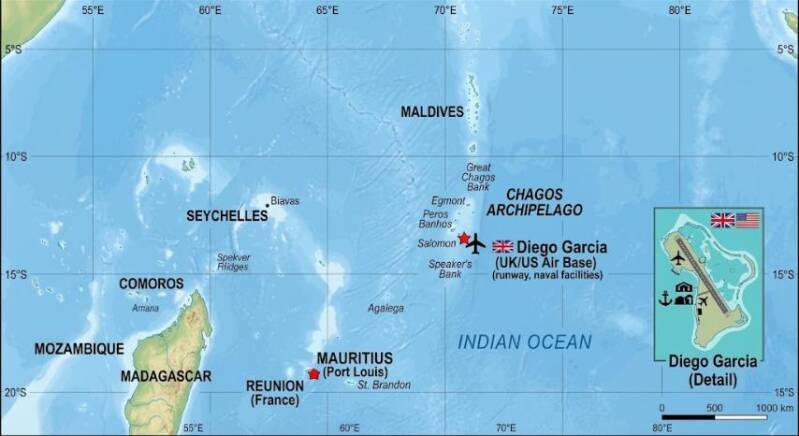
- Strategic Security Concerns: Critics emphasise that the Chagos Archipelago, particularly the Diego Garcia airbase, is a vital military asset used by the United States to police the Indian Ocean region. Security analysts argue that ceding control to Mauritius—a country with growing diplomatic and economic ties to China—could jeopardise Western strategic interests.
- Exclusion of the Chagossian People: A central point of criticism from both community leaders and MPs is the lack of direct consultation with the indigenous Chagossian population. Navin Ramgoolam, the Mauritian Prime Minister, recently claimed the deal would bring a "painful chapter" to a close, but critics point out that the actual Chagossians—many of whom now live in the UK—have been completely shut out of the process.
- The Ballooning Financial Burden: The financial terms of the agreement have drawn fierce condemnation. While the government initially claimed the cost would be £3.4 billion, recent Treasury reforms mean the price tag is set to rise by another £288 million—leaving British taxpayers to foot an astronomical bill for giving away sovereign territory.
The Great Geopolitical Paradox: Paying to Lease Our Own Land
The central absurdity driving public and political outrage is the structural setup of the deal itself. The Chagos Islands are currently a British Overseas Territory, fully controlled by the UK. However, following advisory, non-binding rulings from international courts labelling British control as unlawful, the government panicked over the long-term legal status of the Diego Garcia military base.
Instead of maintaining sovereign control, the government's solution was to give full ownership of the islands away to Mauritius. In return, Mauritius has agreed to lease the Diego Garcia base back to the UK and US for 99 years. Critics have roundly mocked this logic, pointing out that the UK is willingly surrendering its own territory, and committing billions of pounds in annual taxpayer cash, simply to buy back permission to use a military base it already owns and operates.
The Pre-Summit Defiance: Burnham's Call to Mauritius
Prior to arriving in the United States, the UK leadership signalled a strong desire to force the agreement through. In a private phone call ahead of the UN General Assembly, Prime Minister Andy Burnham gave an explicit, confident assurance to Navin Ramgoolam, the Prime Minister of Mauritius, that he would do "everything possible, together with the USA, towards the ratification of the Chagos treaty”.
Speaking to reporters on his flight to New York, Burnham admitted that while a final resolution was not yet locked in due to Washington's previous hesitations, he was fully determined to "work towards a resolution" alongside Mauritius. Defence ministers heavily backed this stance, defending the ballooning costs as a necessary expense to lock in the 99-year lease.
Confronted by the Press: Trump Rejects the Pact
However, that initial confidence evaporated on the sidelines of the UN summit. Standing alongside the UK Prime Minister for their first face-to-face bilateral meeting, a journalist asked Donald Trump directly for his verdict on the Chagos pact.
Trump did not hold back, branding the handover a "terrible deal" and calling the underlying premise "ridiculous". Addressing the gathered reporters, the US President lambasted the logic of giving away the territory, stating:
"I don’t support it. I think it’s a terrible deal. They all of a sudden say they have ownership, somebody has ownership that never showed up before after decades and centuries. I think it's ridiculous."
He then turned towards the UK Prime Minister stating, "I think the prime minister is going to be looking at it". Here, Trump sent an unmistakable signal that the deal completely lacked vital American backing.
The Fallout: The British Review
Following Trump's public denunciation, the political calculus in London shattered. The Defence Secretary, Wes Streeting, swiftly confirmed that the UK is officially reviewing the Chagos Islands handover, admitting that the government simply cannot ignore the reality that their primary security ally opposes it. Ministers have conceded that sticking their heads in the sand is no longer a viable strategy, and no money will be handed over to Mauritius while the review is active.
This abrupt halt has provoked heavy fire from the opposition. Conservative leader Kemi Badenoch hit out at the Prime Minister on social media, demanding to know:
"Why can’t Andy Burnham do ‘everything possible’ to bring down the cost of welfare, or do ‘everything possible’ to fund defence properly? Why is giving away this territory such a priority for Labour that they are willing to give away billions to do so when there’s little money for anything else?"
Final Thought
The abrupt halting of the Chagos handover serves as a stark reminder of a fundamental geopolitical truth: national security and key strategic alliances will always outweigh the idealistic pursuit of international bureaucratic consensus. By attempting to appease international courts, British officials inadvertently designed a deal that alienated their most vital security partner while completely ignoring the indigenous Chagossians who actually have a rightful claim to the land. If the UK government is looking for a popular, common-sense exit from this diplomatic quagmire, Donald Trump has just handed them the perfect excuse to quietly bury it forever.
Add comment
Comments