

At the recent Labour Party Conference in Liverpool, Prime Minister Andy Burnham unveiled what is being hailed by the left as a righteous crusade against "rogue landlords". In his keynote speech, Burnham took direct aim at the private rented sector, declaring an end to what he termed "absentee landlords" exploiting the housing system.
The headline-grabbing core of his policy? If a privately owned home is deemed "substandard" or "poor-quality", the landlord will receive a single warning. If they fail to act, the government intends to step in, make it drastically easier for local authorities to forcibly absorb that asset into the public housing stock.
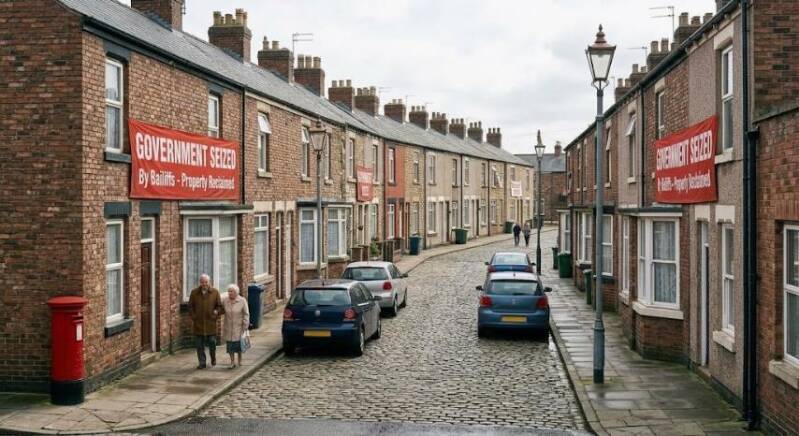
On paper, targeting the worst-off homes sounds noble. But look beneath the populist rhetoric, and you expose a deeply unsettling authoritarian reality. Critics are already sounding the alarm, with former Conservative minister Tom Pursglove explicitly warning that these aggressive state-backed asset seizures sound “a little bit like Communism”.
And he is entirely correct.
The Ultimate Conflict of Interest: Lawmaker, Judge, and Beneficiary
The most terrifying aspect of Burnham’s new framework is a simple, fundamental question: Who decides what is "up to standard"?
The answer: The Labour government.
Under this potential legislation, the state is granting itself the ultimate, unilateral monopoly over private property. Local council housing officers and inspectors—unelected bureaucrats—will be the ones holding the ruler. They will create the standard, they will judge whether your property meets it, and if they decide it doesn’t, they will use expanded state powers to take the property away from you.
This is a textbook conflict of interest. The state acts as the lawmaker, the judge, and the direct financial beneficiary. By loosening the legal restrictions on compulsory purchase orders (CPOs), the government will create a legal pathway to seize private wealth to meet its own political housing targets. It is a system built on coercion rather than cooperation.
A Dangerous Slippery Slope for Property Rights
Private property ownership is the single most important bedrock of a free society. It is the boundary line that prevents the state from dictating how you live, how you invest, and how you secure your future.
Industry experts at Propertymark have already demanded urgent clarification on what Burnham actually means by "worst quality" or "substandard". Because without razor-sharp, objective legal protections, "substandard" becomes a moving goalpost. What starts as a crackdown on truly dangerous, derelict dwellings could easily expand into penalising landlords for minor maintenance backlogs or cosmetic wear and tear.
Landlord associations like the National Residential Landlords Association (NRLA) and commentators at LandlordZone have warned that this hostile rhetoric will inevitably backfire. Instead of improving standards, threatening private citizens with asset forfeiture will scare capital out of the market entirely. Good landlords will sell up, housing supply will plummet, and the rental crisis will worsen.
Hypocrisy of the Highest Order
Perhaps the most egregious element of Burnham's speech is the sheer hypocrisy of a government claiming it needs to seize private property because councils can manage it better.
Across the United Kingdom, local authorities are notoriously some of the worst landlords in the country. Thousands of council-owned properties sit completely empty, neglected, or mired in bureaucratic disrepair for years. If a private individual managed property the way many local authorities do, they would be facing criminal prosecution. Yet, rather than fixing its own house, the state’s solution is to expand its empire by taking yours.
Final Thought
When a state claims the right to seize private assets based on criteria that the state itself defines, enforces, and profits from, it is no longer operating a free-market economy. This is democratic socialism morphing into raw, state-mandated collectivism. Burnham’s housing policy isn’t a modern fix for the rental market—it is a deeply concerning taste of communism.
Add comment
Comments