

The foundational contract of any democratic society relies on an absolute commitment to transparency. When public bodies design codes, definitions, and guidelines intended to govern public behaviour, the electorate has an absolute right to know who is holding the pen. Yet, a growing culture of institutional obfuscation, shifting explanations, and hidden datasets is actively undermining this principle, shielding policymakers from public accountability and threatening fundamental freedoms.
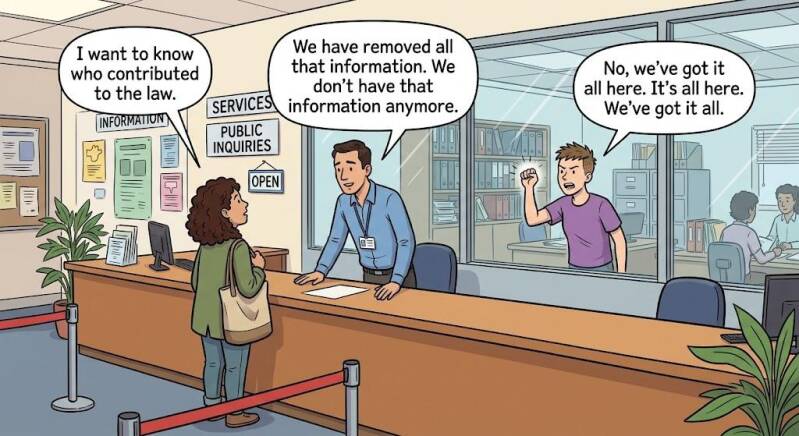
A prominent example of this crisis has unfolded within the Ministry of Housing, Communities and Local Government (MHCLG) regarding the drafting of a new official definition for Islamophobia. Following intense scrutiny under Freedom of Information (FOI) laws, the department was forced into a significant U-turn—admitting that key consultation documents previously claimed to have been permanently "deleted" actually exist on internal backup systems.
This controversy exposes a severe procedural dilemma regarding how public data is managed. It also highlights a broader, systemic effort by institutions to deploy vague language to regulate speech while evading public backlash over the creation of what critics argue is a backdoor blasphemy law designed for one religion only.
The Data Protection Paradox: Deletion or Deception?
The shifting explanations provided by civil servants expose a critical compliance failure regarding information handling. Under standard government guidelines, administrative consultation data must be retained for accountability and transparency for a minimum of two to twenty years. If a public department permanently scrubs individual submissions immediately after compiling an internal report, it commits a direct breach of official records policies and archival standards.
Conversely, admitting that the data still exists on active servers and email systems after telling FOI applicants it was "disposed of" creates a secondary crisis. Under the Data Protection Act, if an organisation establishes a shortened retention period for sensitive personal data to justify its erasure, it cannot legally maintain secondary, shadow copies on backup servers while claiming the information "is not held".
If the records are intact, the ongoing resistance to publishing a full list of the organisations and individuals who took part in the consultation is highly telling. It suggests that the bureaucracy is prioritising its own self-preservation over the statutory right to information.
Why Institutions Obfuscate: The Reality of Selective Consultation
When an institution claims it is "not in the public interest" to reveal the participants of a policy consultation, it usually points to an effort to evade public scrutiny. Evidence indicates that the "Call for Evidence" regarding the Islamophobia framework was launched quietly, with questionnaires distributed privately to a limited, hand-picked group of consultees, effectively locking the wider public out of the process.
The refusal to specify exactly which groups had an input raises valid concerns about whether controversial, polarising, or ideologically extreme factions successfully lobbied to influence the text. By withholding the names of these organisations, the state avoids a major political crisis. It shields itself from accusations that it collaborated with radical or non-engagement factions to design guidelines intended for widespread adoption across schools, local councils, the NHS, and private corporations. Transparency forces a government to explicitly state who is shaping public policy, preventing guidelines from being quietly dictated behind closed doors.
Strategic Ambiguity and the Chilling Effect on Speech
The ultimate danger of this institutional secrecy is the weaponisation of vague language to resurrect concepts that look entirely like blasphemy laws. In the United Kingdom, traditional blasphemy laws were formally eradicated nearly two decades ago to protect the fundamental right to free expression, religious criticism, and robust debate. The sudden attempt by the state to introduce a formal, sweeping definition of Islamophobia—or its rebrand, "anti-Muslim hostility"—threatens to reverse this progress by shielding a single religion from public scrutiny.
When a state-backed code uses fluid, highly subjective criteria rather than clearly defined criminal thresholds, it creates an environment of strategic ambiguity. Because private firms, local authorities, and HR departments are heavily encouraged to adopt these definitions into everything they do, they begin policing everyday speech out of a fear of litigation or reputational damage. This effectively introduces a backdoor blasphemy framework, where legitimate theological criticism, political satire, or robust debate about religious practices is misclassified as a "non-crime hate incident" or professional misconduct.
When lines of a boundary are kept intentionally vague, the institution retains the ultimate power to decide who is violating the rule on a case-by-case basis, making it incredibly difficult for citizens to contest or manage.
Final Thoughts
True democratic safety and justice rely on clear, objective laws evaluated by independent courts—not hidden guidelines manufactured by secretive working groups. A government that relies on spin and hidden datasets to mask the origin of its policies merely borrows time at the expense of long-term social cohesion. The public deserves to know who helped shape the definitions that impact daily working life and civil liberties. Until public institutions are forced to operate with complete transparency, trust in modern governance will continue to collapse, and fundamental freedoms will remain under threat.
Add comment
Comments