

There are very few things left in British life that are universally considered sacred. In a fractured, rapidly changing world, our collective traditions have been steadily chipped away. Yet, Remembrance Sunday and the Royal British Legion’s poppy have stood as an unbreakable circle of national gratitude and solemn memory. It is a big story, an inclusive story, and above all, our story.
Which is precisely why the introduction of the so-called "Palestinian poppy" is so deeply offensive, disgusting, and completely unacceptable to polite society.
The hijacking of our national day of remembrance by political activists is a sick betrayal of our veterans and those who made and still make the ultimate sacrifice for this country. Remembrance Sunday is one single day of the year. It belongs to the fallen, not to the modern arena of toxic geopolitical protest.
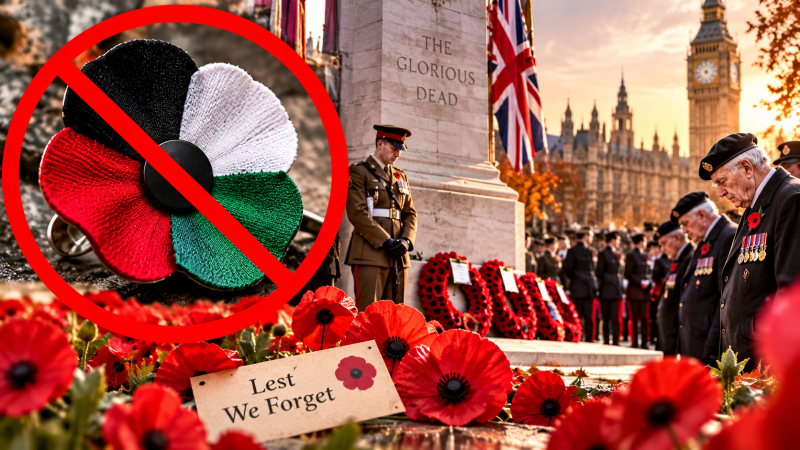
The Cynical Origin of a Sham Symbol
The "Palestinian poppy" is not a genuine symbol of remembrance; it is a calculated political badge. The background of its creator, Dr Abdul Ismail, an individual whose critics have exposed him for making extreme online statements, including describing Israel as a "cancer" in a video and appearing to defend Hamas’s horrific October 7th attacks as a form of "legal resistance".
When an organisation brags that these sham items have sold out, we have to ask ourselves: what kind of a person purchases such a thing? The truth is that when people attempt to "redecorate" the poppy—whether it is this version or the white poppies of previous years—it is never truly about the cause they claim to support. It is entirely about themselves. It is an exercise in narcissism and a deliberate attempt to cause controversy at the expense of our national grief.
An Insult to Volunteers and Veterans
For generations, the poppy has represented a unified "thank you" from the British public. Across towns and villages, thousands of dedicated volunteers—often elderly people who have supported the armed forces their entire lives—give up their time to collect money for the Poppy Appeal. They do this because they have a personal connection to a war, a service member in their family, or simply a deep-rooted sense of civic duty.
To bring a highly divisive, partisan political protest into this space creates an unnecessary headache for the very volunteers who put their heart and soul into this cause. Why should our war memorials, which should be crowded with hundreds of quiet citizens paying their respects, be turned into battlegrounds for modern political theatre? The poppy stretches across the history of the entire commonwealth. It remembers everyone who fell—including those in highly controversial wars some would prefer to forget. It does not need to be updated, modified, or replaced.
A Moral and Societal Reckoning
This matter is for robust public condemnation and social exclusion.
If you are the type of person who thinks it is acceptable to wear a "Palestinian poppy" on Remembrance Sunday, you have completely detached yourself from the shared values of this country. They should be shunned by polite society and publicly reminded that their behaviour is an absolute disgrace.
A Final Thought
Remembrance is a debt we pay to the past so that we might enjoy our future in peace. When a person steps out onto the street wearing a counterfeit poppy to make a political statement about Gaza or Israel, they are trampling over the graves of the men and women who gave them the right to speak freely in the first place. Some things are bigger than your personal political opinions. For twenty-four hours a year, the British public asks for nothing more than to remember our dead in peace. Leave our poppy alone, let our volunteers work without interference, and keep your protests away from our war memorials.
Add comment
Comments