

The political tide is turning in Britain's town halls. For years, the City of Sanctuary movement has expanded across the country, encouraging councils to commit resources and funding to supporting refugees and asylum seekers. But now, with council tax rising and essential services under pressure, some local authorities are beginning to question whether their priorities have been misplaced.
Wandsworth Council has taken a decisive step, voting to end its Borough of Sanctuary programme. For residents tired of seeing their hard-earned money stretched ever further, it is a welcome victory for common sense.
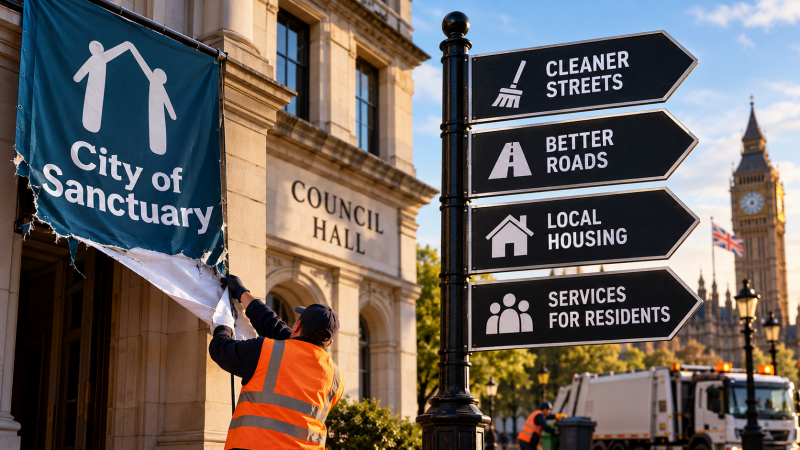
Wandsworth Draws the Line
Following a change in political leadership, Wandsworth's Conservative administration has moved to scrap its sanctuary programme, associated grants fund and Migration Board. The decision has sparked criticism from opponents, who argue that it undermines the borough's tradition of welcoming refugees. But the council's position raises a perfectly reasonable question: shouldn't local government concentrate on looking after its own residents and delivering the services they pay for? Surely clean streets, maintained roads, reliable bin collections and access to affordable housing should come before political charters and discretionary initiatives?
The Growing Sanctuary Movement
The City of Sanctuary network has grown rapidly, reaching 1,560 organisations in 2025, an increase of 22% on the previous year.
Its influence extends into schools, universities and other public institutions, with some universities offering substantial scholarships and financial assistance to eligible refugees. Where supporters celebrate this expansion. Critics, however, question why local authorities should become involved in a movement that also campaigns for changes to national immigration policy. After all, immigration and border control are Westminster's responsibilities, not those of local councils. Helping people already living legally in Britain is one thing. Using council resources to support wider political campaigning is quite another.
Taxpayers Deserve Better Priorities
Wandsworth previously established a £200,000 Borough of Sanctuary Community Fund to support refugee and asylum-related projects. While these initiatives may have worthwhile aims, residents are entitled to ask whether this represents the best use of public money, particularly when local families face housing shortages, rising bills and overstretched services, should discretionary grants really take priority over the basics? And where is the evidence that every pound spent delivers meaningful results?
Critics also question the effectiveness of sanctuary programmes. Home Office figures recorded 73 asylum seekers receiving asylum support in Wandsworth at the end of June 2026. That figure does not represent the total number of refugees in the borough, but it reinforces the need for clear reporting on who benefits from these schemes and what taxpayers receive in return.
Compassion matters, but so do accountability, affordability and value for money.
What About Integration?
Supporters argue that sanctuary programmes help refugees learn English, find employment and integrate into British society. Those are reasonable objectives. People legally settled in Britain should be encouraged to become independent, contribute to their communities and respect British laws. But does achieving those objectives really require councils to sign up to external political charters and fund additional programmes? Surely practical support can be delivered without turning local government into an extension of national immigration campaigning.
A Victory for Local Residents
Wandsworth's decision sends an important message to councils across Britain: local taxpayers and essential services must come first. For too long, residents have watched council tax bills rise while struggling to get the basic services they expect. Meanwhile, money continues to be committed to initiatives that many taxpayers never asked for. However, ending sanctuary accreditation will not magically repair every pothole or shorten every housing waiting list. But it does show a willingness to question spending priorities and challenge policies that have become politically fashionable.
This is not about abandoning compassion. It is about restoring fairness, accountability and common sense. Immigration policy belongs in Westminster. Local councils should concentrate on the communities they were elected to serve.
Final Thought
When councils can find money for political charters and sanctuary schemes but struggle to deliver the basic services residents pay for, something has gone seriously wrong with local government. Wandsworth has challenged those priorities. But why has it taken so long, and how many other councils are still putting political ideology before the people who elected them?
Add comment
Comments